Energy specialist
Are you involved in the renewable energy sector (offshore wind, floating solar) and looking to adopt a proactive environmental approach? We work with you to develop innovative, scientifically sound …
Installation of 20 Biohut units beneath the Bomhofsplas solar farm.
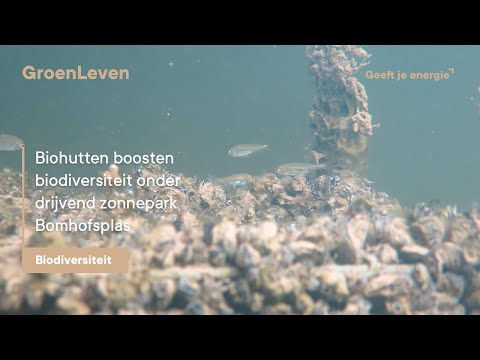
This four-year project aims to improve the habitat functions beneath the floating photovoltaic platform installed in a sandpit and to assess the ecological benefits of the Biohuts for the park in this environment. From 2020 to 2023, three ecological monitoring surveys were conducted. These studies have provided a better understanding of the role of Biohuts, as well as their colonization by invertebrates and juvenile fish in the aquatic environment of this sandpit.
2020
Installation of Biohut®
Rights reserved: Ecocean
2021
First vagile monitoring
Juvenile of european perch (Perca fluviatilis)
Rights reserved: Ecocean
2022
Second ecological monitoring
Juveniles of Cyprinidae sp.
Rights reserved: Ecocean
2023
Third ecological monitoring
Juvenile European perch (Perca fluviatilis)
Rights reserved: Ecocean
The 20 Biohuts were installed in three separate areas of the park, divided into three groups of 8, 6, and 6 units, respectively. The three monitoring campaigns revealed three species of fish (common perch, cyprinids, and tubular-nosed goby) and two species of invertebrates (Limnae sp. and gammarids). In total, we observed 2,382 individuals during the three monitoring campaigns, including 1,951 invertebrates and 431 fish. We also observed zebra mussels and freshwater sponges (Spongilla lacustris) on the grilles of some Biohuts.
The most recent survey, conducted in 2023, also revealed that we may have reached a peak in the number of species present in the Bomhofsplas solar park. The significant abundance of species at the base of the food chain, such as daphnia and gammarids, indicates that the Biohut ecosystem is balanced and functioning well to support aquatic life. The high abundance of small arthropods is of crucial importance because they play a role in the food chain. They serve as prey for other fish species and larger animals. Their abundance indicates an environment conducive to the proliferation of a diverse aquatic fauna, which is essential to the health and stability of the ecosystem as a whole.
These results are encouraging and highlight the importance of the Biohut as an artificial structure that benefits aquatic biodiversity. The Biohut plays a role in preserving and supporting key ecological functions within the Bomhofsplas sandpit ecosystem, thereby contributing to the conservation of aquatic life and environmental sustainability.
Want to talk to our project team? We are here to discuss your needs.
Are you involved in the renewable energy sector (offshore wind, floating solar) and looking to adopt a proactive environmental approach? We work with you to develop innovative, scientifically sound …
Biohut® is an artificial nursery designed to restore the ecological functions of developed areas.
Information
Credits
Transcription