Energy specialist
Are you involved in the renewable energy sector (offshore wind, floating solar) and looking to adopt a proactive environmental approach? We work with you to develop innovative, scientifically sound …
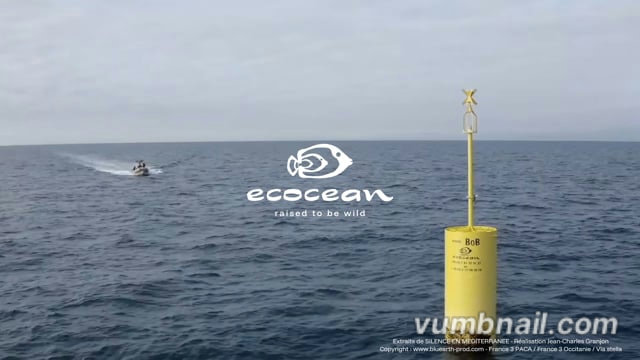
A research project launched off the coast of Leucate to better understand the benefits of making offshore wind turbine floats more complex. To this end, two buoys, BoB and OCG-DATA, were deployed for 4 and 2 years, respectively.
Rights reserved: Rémy Dubas
The overall objective of the ConnexStere project was to gather knowledge about the fish and macroinvertebrate species found offshore on and around floating structures and to compare them with better-known artificial coastal sites (ports, harbors, artificial reefs). The project also sought to assess whether relationships, connections, or similarities existed between these coastal sites and the offshore sites.
A study on the benefits of eco-designing wind turbine floats has also been launched to assess the ecological functions that these artificial structures could provide for marine ecosystems. Over a four-year period, 140 monitoring sessions were conducted on a biodiversity observation buoy (BoB) located 16 km off the coast of Leucate at the EFGL pilot park site, and subsequently on the OCG-DATA buoy operated by OCERGY, installed 30 km offshore (future site of AO6).
2023
BoB Buoy Installation
Rights reserved: Ecocean
2021
Diving at BoB
Rights reserved: Rémy Dubas
2021
Diving on BoB
Imperial Wrasse (Schedophilus ovalis)
Rights reserved: Ecocean
2021
Installation of Biohut® at OCG Data
2023
Installation of Biohut® at OCG Data
2023
OCG Data submerged
Rights reserved: Ecocean
2023
Biohut® on OCG Data
Rights reserved: Gilles Saragoni
2023
Ecological monitoring sur OCG Data
Fringe blenny (Parablennius pilicornis)
From a technical standpoint, the buoys and their moorings demonstrated exceptional durability, with no detachment whatsoever, despite challenging weather conditions, including swells exceeding 9 meters. The loss rate was very low, even for the Biohuts attached to the buoys to increase their complexity. Installation, maintenance, and removal proceeded without a hitch.
From a biological perspective:
- Better understanding of the fish species inhabiting the area, thanks to the combination of several monitoring methods and the validation of the potential for colonization by coastal species (larval passageway).
- Better understanding of the potential colonization by macroinvertebrates (and, to a lesser extent, sessile flora and fauna), primarily in the Biohuts.
- Several species common to both offshore and coastal areas, for both fish and macro-invertebrates...
- Several species are common to both offshore and coastal areas, including both fish and macroinvertebrates.
- Similar functional diversity between the open sea and the coast.
- Existing connectivity with the open sea confirmed by the presence of species tagged on the coast and observed at the BoB buoy.
- Diverse marine life exists in the open sea at the surface (0–15 m) on floating structures; abundance and species richness are much greater and more diverse than previously imagined.
Want to talk to our project team? We are here to discuss your needs.
These research projects involve a significant amount of data, including technical reports, detailed analyses, and scientific presentations. At this time, this work has not yet been made publicly available. However, we would be happy to share the information that best meets your needs.
Are you involved in the renewable energy sector (offshore wind, floating solar) and looking to adopt a proactive environmental approach? We work with you to develop innovative, scientifically sound …
Biohut® is an artificial nursery designed to restore the ecological functions of developed areas.
Information
Credits
Transcription